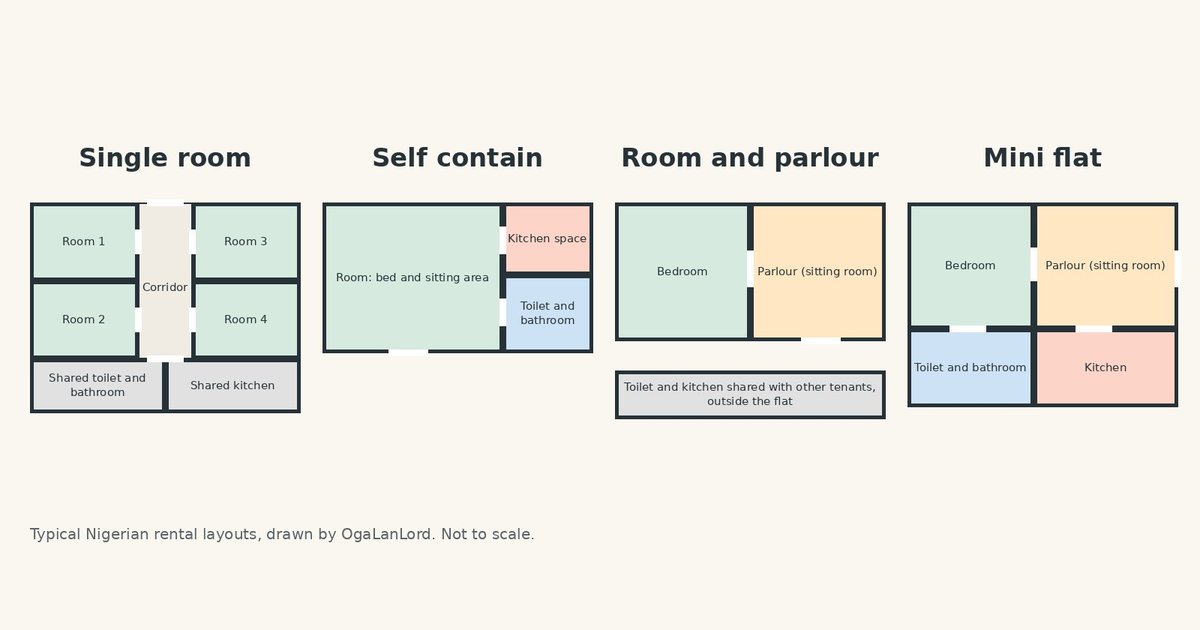
Self contain, mini flat, room and parlour: what each one means
A self contain is one room with its own toilet, bathroom and kitchen. A mini flat adds a parlour. Here is what each rental type means and who it suits.
A self contain is one room with its own toilet, bathroom and kitchen space, so you don't share any of them with other tenants. A mini flat has all of that plus a separate sitting room, or parlour. A room and parlour is a bedroom and a parlour, and unless the advert also says "self contain", the toilet and kitchen may be shared with other people in the building. That is the short answer to "what is a self contain?" and how it differs from the other two.
Agents and landlords use these words loosely, so knowing what a self contain is, and what it isn't, saves you from wasted inspections. Below is a plain meaning for each term, a simple layout, who each one suits and what to ask before you go and see a place.
What is a self contain?
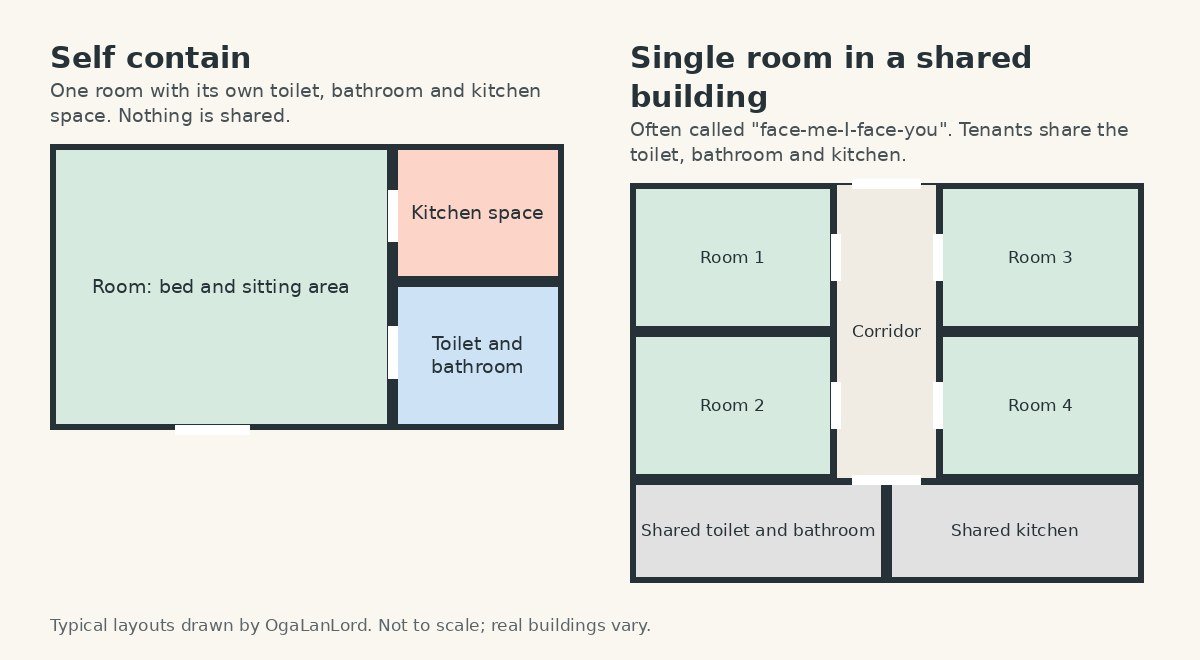
A self contain, often shortened to "self-con", is a single room that serves as your bedroom and sitting area, with its own toilet and bathroom and some kind of kitchen, all behind your own door. "Self-contained" simply means you don't share these facilities with anyone outside your unit.
The kitchen part varies a lot. In some buildings it is a small separate kitchen with a sink and a window. In others it is a corner of the room or a narrow space by the bathroom where you can put a gas cooker. Ask which one it is, because it changes how you will live there.
Some newer buildings call a larger, well-finished self contain a "studio" or "studio apartment". The idea is the same: one main room, with your own bathroom and kitchen space.
Who it suits: one person, such as a student, someone starting their first job, or someone who travels often and mainly needs a private, secure base. It is tight for a couple, and hard if you work from home or have visitors often.
Single room, or "face-me-I-face-you"
A single room is a room in a building where several tenants live, with the toilet, bathroom and kitchen shared. In many of these buildings the rooms open onto a central corridor and face each other, which is where the name "face-me-I-face-you" comes from.
It is usually the simplest kind of home to rent in a building, but you will be sharing daily life with your neighbours. Before you agree, ask how many people share each toilet and kitchen, who cleans them, and how the light bill and water are shared.
Who it suits: someone who wants to keep costs down for a while and doesn't mind sharing. If privacy matters to you, look at a self contain instead.
Room and parlour
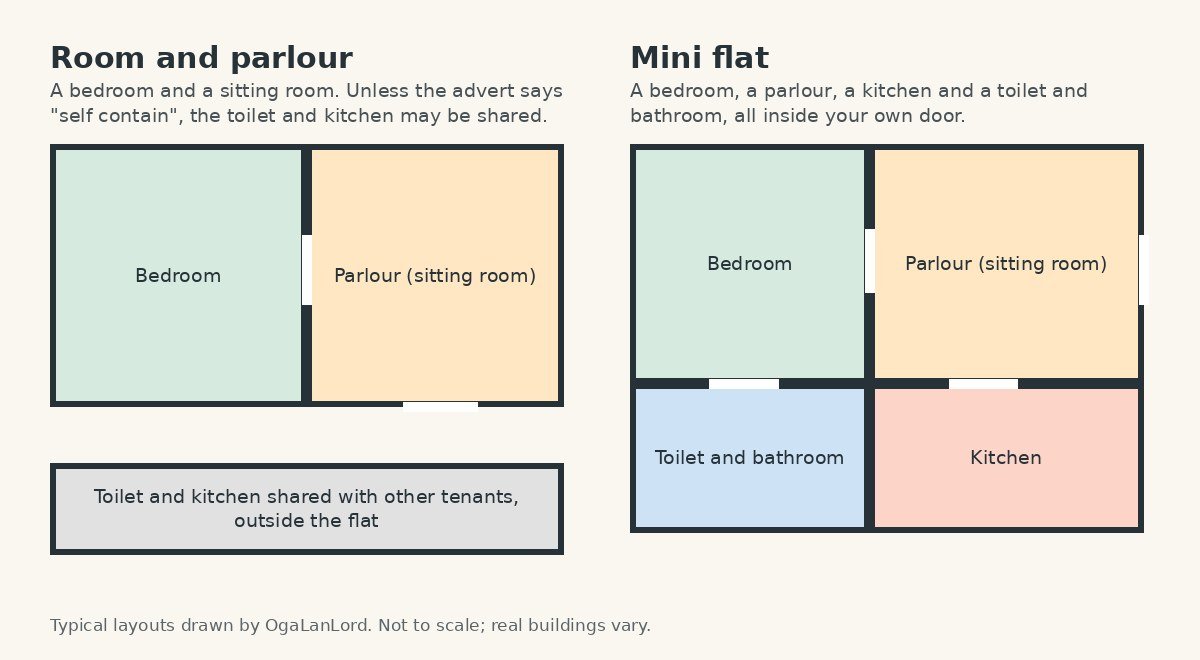
A room and parlour is a bedroom plus a separate sitting room. The question is what comes with it, because the same name is used for two different homes:
- Room and parlour with shared facilities. Common in older compound houses. You have your own two rooms, but you share the toilet, bathroom and kitchen with other tenants, usually down the corridor or in the backyard.
- Room and parlour self contain. The toilet, bathroom and kitchen are inside your own unit. In practice this is a mini flat, and many adverts use the two names for the same thing.
If an advert only says "room and parlour", ask straight away whether it is self-contained. It is the single biggest difference between two places with the same name.
Mini flat
A mini flat has one bedroom, a parlour, a kitchen, and a toilet and bathroom, all inside your own door. Nothing is shared except the compound itself and things like the gate, the borehole or the generator, depending on the building.
Who it suits: a couple, someone who works from home, or anyone who wants to receive visitors in a parlour instead of in the bedroom. It is also a sensible step up from a self contain when you want more space without a bigger flat.
Mini flat or one bedroom flat: what is the difference?
Many agents use the two names for the same thing. When they do mean different homes, a one bedroom flat is usually larger, with a bigger kitchen, more storage and sometimes a dining area or a guest toilet.
There is no official size that turns a mini flat into a one bedroom flat, so judge the space, not the name. Ask for a short video on WhatsApp before you travel to inspect.
Other words you will see in adverts
- En-suite. A bedroom with its own toilet and bathroom attached. In a two or three bedroom flat, "all rooms en-suite" means every bedroom has one.
- Serviced. There is a service charge for shared things such as security, cleaning of common areas and sometimes power from a central generator. Ask exactly what it covers and get it in writing.
- Newly built or "first tenant". No one has lived there before. Check that the plumbing, wiring and meter are finished and working before you pay.
- BQ. Short for boys' quarters, a small separate unit in the same compound as a main house. It can be a self contain or a room and parlour, so ask the same questions.
Questions to ask before you inspect
- Is it self-contained? Ask whether the toilet, bathroom and kitchen are inside the unit, and if not, how many people share them.
- Is the kitchen a room or a corner? Ask for photos or a short video on WhatsApp.
- How is light paid for? Ask whether the unit has its own prepaid meter or shares one with other tenants, and how a shared bill is split.
- Where does the water come from? A borehole, a well or the public supply, and whether there is an overhead tank and a pumping machine that everyone relies on.
- What will you pay in total? Ask for a written breakdown of everything due on top of the rent, such as agency, legal, caution and service charge, before you inspect.
- Who else lives in the compound? Ask whether the landlord lives on site or uses a caretaker, and who you call when something breaks.
When you go to see the place, check that what you see matches what you were told. If the "self contain" turns out to share a toilet, that is worth knowing before any money changes hands.
Find your next home
See what is listed on OgaLanLord's property listings, and read our guide to renting a house safely in Lagos before you pay for anything. Every listing is reviewed by our team before it goes live, including a call to the owner or agent.
If you own or manage a self contain, mini flat or any other home, you can list your property on OgaLanLord. Say clearly whether the unit is self-contained, and you will get fewer wasted enquiries.
Drawings: floor plan illustrations made by OgaLanLord for this post.